Mechanical Water Meter
Dry Dial vs Wet Dial Water Meters: How They Differ
How dry dial and wet dial water meters differ: register chamber, magnetic coupling, dial visibility, frost damage and low-flow sensitivity.
The difference is in the register chamber, not the measuring element
Both types measure the same way: water passes through the chamber, turns an impeller or a piston, and the rotation is translated into a volume reading. What changes is where the register sits and how the rotation reaches it.
In a wet dial meter the register chamber is open to the water. The dial sits in the same water that is being measured, and the impeller shaft drives the counter train through a direct gear connection.
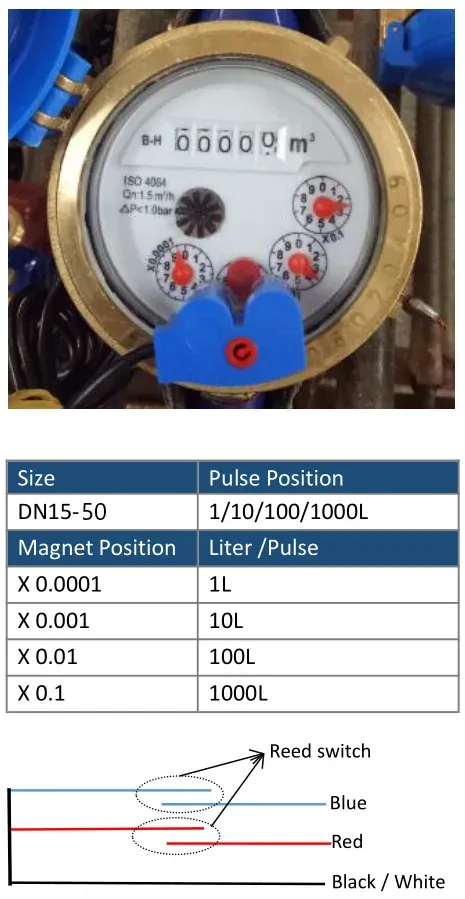
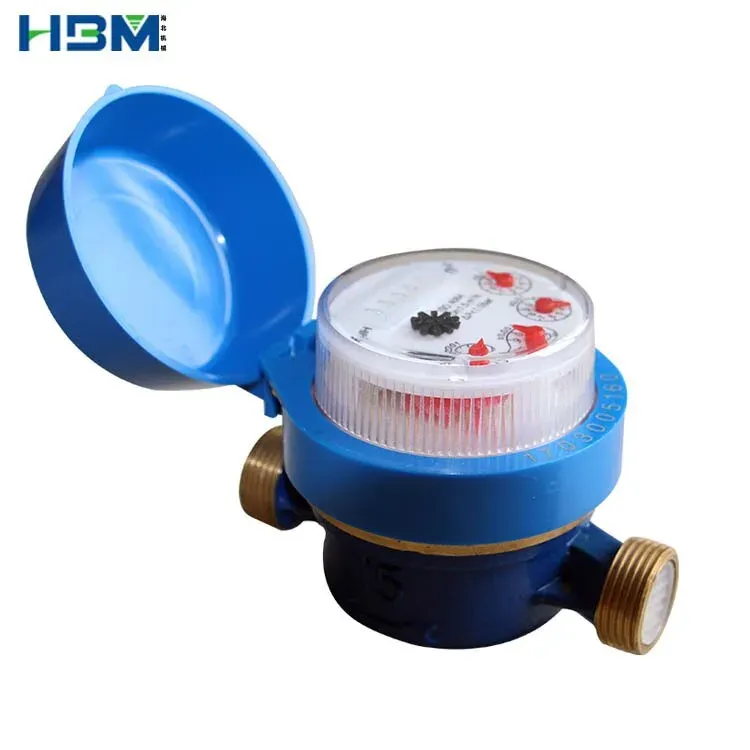
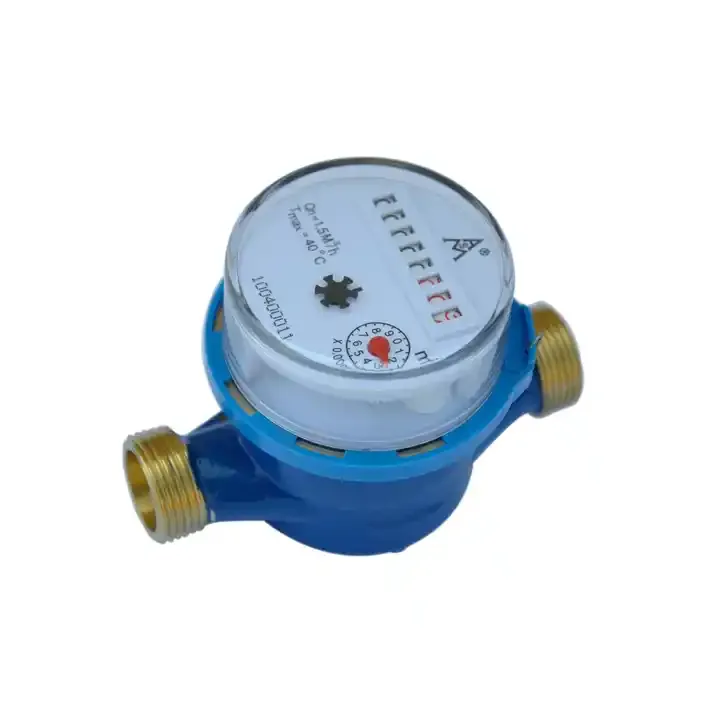
In a dry dial meter the register chamber is sealed and dry. The impeller shaft carries a magnet, and a second magnet on the register side follows it through the wall of the sealed chamber. The counter never touches water.
Everything else that buyers notice about the two designs follows from that one structural difference.
Dial visibility is the difference you see in the field
A wet dial register is immersed, so the dial face is in contact with the water. In clean water this is fine for years. In water carrying iron, hardness or biological content, the dial face collects deposits and can fog or film over. The meter still measures correctly, but the reading becomes hard to take, and eventually someone has to open the chamber and clean it. In cold weather there is a second problem: the dial glass and the counter assembly are directly exposed to freezing water and can be damaged, which affects the recorded data.
A dry dial register stays clear because nothing reaches the dial face. This is the single most practical reason the dry design took over residential metering: the reading stays legible for the life of the meter without maintenance. The register is also unaffected by season and by water quality, because no water reaches it.
If your utility reads meters manually, or if customers read their own, dial visibility is not a cosmetic detail. It decides how many callbacks you get.
Where the frost claim needs correcting
A common claim is that dry dial meters cannot freeze because they have no water inside. That is not accurate, and it matters if you are specifying for a cold region.
A dry dial meter still has water in the body and the measuring chamber. If that water freezes, the body or the chamber can crack exactly as a wet dial meter can. What the dry design protects is the register: because the register chamber holds no water, there is no ice expanding against the glass, so the lens and the counter train are far less likely to be destroyed.
The practical difference is therefore about what fails and what it costs to fix. A frozen wet dial meter usually needs a new register or a complete replacement. A frozen dry dial meter more often needs a new body with the register reusable. That is a real advantage, but it is not the same as being frost-proof.
If the site is exposed to hard frost, the answer is insulation, a meter box, or a frost collar, not a meter type.
Sensitivity: what the coupling actually costs
Another common claim is that wet dial meters are more sensitive because the counter touches the water. That is not the mechanism. Sensitivity at low flow is set by the measuring element, the bearing quality and the clearance between impeller and chamber, not by whether the register is wet.
What the magnetic coupling does introduce is a small drag. Every magnetic drive has some slip, and a poorly designed one can lose registration at the very bottom of the range. A well designed one does not: our dry dial meters are rated to the same Q1 values as the equivalent wet design, because the coupling is sized so that slip stays below the starting-flow threshold.
So the honest statement is this: a dry dial meter is not inherently less accurate, but the quality of its magnetic coupling decides whether it is. Ask for the Q1 figure and the accuracy class, and compare those rather than the design name.
Why we build dry dial across the range
Every domestic and light commercial meter we make is dry dial: single jet, multi jet, volumetric piston, vertical and horizontal Woltman, in brass, plastic, cast iron and stainless steel bodies. The large diameter Woltman range is dry dial as well.
That is a deliberate choice, for three reasons. The register stays readable without maintenance. A frozen register can be replaced without scrapping the body. And the sealed register tolerates damp meter boxes, which is where a wet dial register degrades fastest.
It also means we can supply the same meter body with different register options, including pulse output and optical direct reading, without changing the hydraulic part.
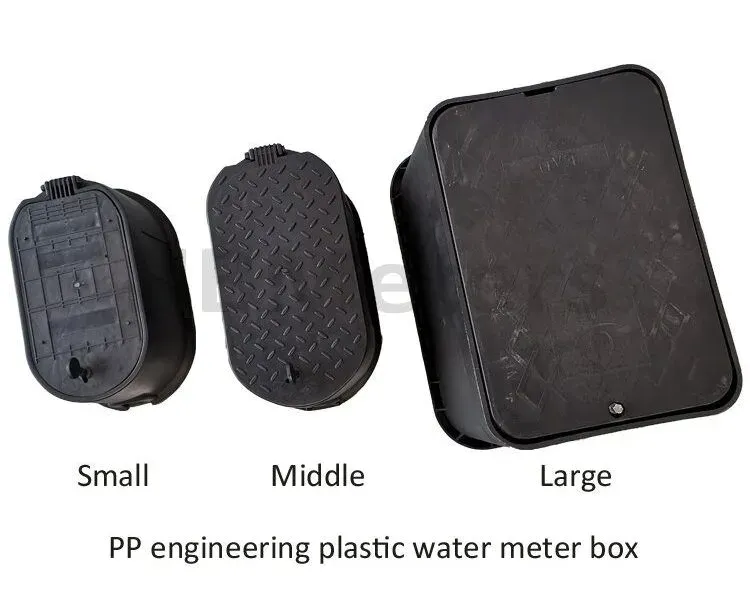
For damp pits and outdoor installations we also supply the PP protection box itself, in four sizes from 6 inch to 14 inch cover diameter, sized to the meter body. Box plus dry dial register is the combination that keeps a reading legible where a wet dial register would fog over within a season.
When a wet dial meter is still the right answer
There are cases where the wet design still makes sense. Very clean water supplies with stable chemistry, where dial fouling is not a risk. Applications where the lowest possible cost per unit matters more than long-term readability. And some legacy installations where the utility standardises on wet dial and wants consistency across its fleet.
We will say so when that is the case. What we will not do is recommend a wet dial meter for a site where the water is hard or the meter box is damp, because that is where the reading problem shows up two years later.
For damp pits and outdoor installations we also supply the enclosure itself, in PP, sized to the meter body. Combining the box with a dry dial register is what keeps the reading legible in the conditions that ruin wet dial meters.
What to tell us when you specify
For a meter recommendation we need the water type and its hardness or iron content, the typical meter box environment (dry chamber, damp pit or exposed), the minimum flow you need to register, and whether readings are taken manually or through a pulse or optical output.
With those four we can tell you the body material, the register type and the accuracy class in one answer, rather than leaving you to choose between two designs on a specification sheet.