Oct 19, 2026Woltman Cold Hot Water Meter
Woltman vs Ultrasonic Water Meter: How to Choose for Large Diameter Lines
A comparison for DN50 and larger lines: cost, low-flow accuracy, pressure loss, moving parts, power needs, and which meter suits which application.
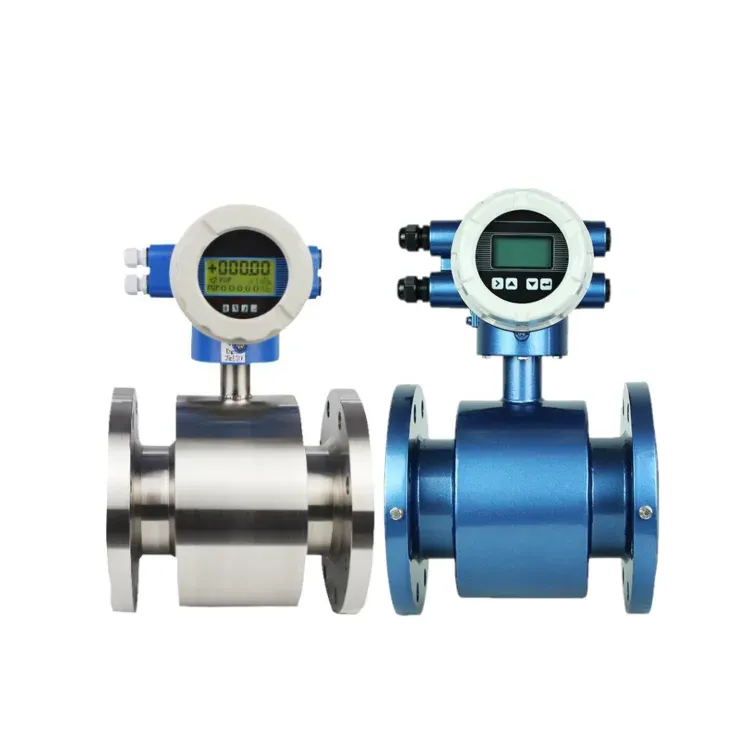
Once a pipeline reaches DN50, two measuring technologies compete: the mechanical Woltman turbine and the electronic ultrasonic meter. Both are legitimate choices, and the right one depends on how the line is used rather than on which technology is newer.
How each one measures
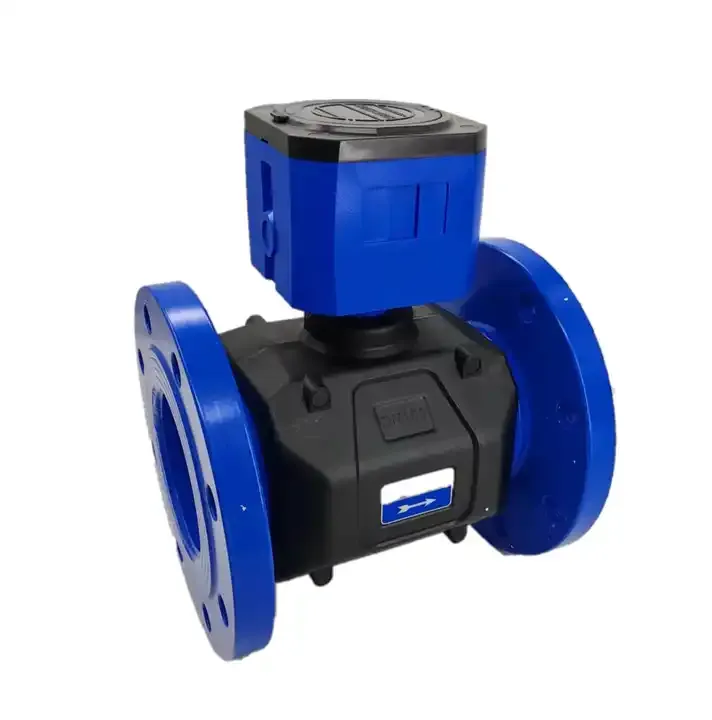
A Woltman meter measures the speed of a turbine driven by the water. A moving part sits in the flow, so the reading depends on that part staying free to rotate. An ultrasonic meter measures the difference in transit time of sound pulses sent with and against the flow. There are no moving parts in the measuring path, so wear is not a factor and the meter can resolve very low flows that a turbine cannot.
Where the Woltman wins
Cost per unit is lower at the same diameter, and that gap widens on large sizes. No power supply is needed - the register is mechanical and the meter works during a power cut. Pressure loss is low but not zero, and the meter is simple to service: the measuring unit is removable from the body without cutting the pipe out. For irrigation, municipal distribution and building supply where the flow is steady and reasonably clean, a Woltman meter is usually the most economical correct answer.
Where the ultrasonic wins
Accuracy at low flow is far better, because there is no starting torque to overcome. That matters where night-time minimum flow is used for leak detection, or where a large line often runs well below its design flow. There is no strainer requirement, no turbine to jam, and no mechanical wear, so long-term drift is lower. The trade-off is that an ultrasonic meter needs power - battery or mains - and costs more at the same diameter.
A simple decision rule
If the line runs near its design flow for most of the day, the water is reasonably clean, and cost per unit matters, specify a Woltman meter. It will hold its accuracy for years with routine maintenance.
If the line needs reliable measurement at low flow, if leak detection or district metering is the purpose, if the water carries fine sediment, or if the meter must feed a data platform without mechanical wear, the higher unit cost of an ultrasonic meter is recovered over the service life.
Mixed sites are common: a Woltman meter on the main supply where flow is high and steady, and ultrasonic meters on the branches where flows vary. That is not a compromise - it is usually the correct specification.
What both share
Both technologies are covered by ISO 4064 for cold and hot water meters, and both are affected by the same installation rules: adequate straight pipe, no air in the line, and a clean flow profile. An ultrasonic meter installed directly after an elbow is as capable of reading badly as a turbine meter is.