Oct 19, 2026Woltman Cold Hot Water Meter
Woltman Water Meter Installation: Straight Pipe Runs, Orientation and Common Errors
Straight pipe lengths, mounting orientation, and the five install errors that make a Woltman turbine meter read inaccurately in the field.
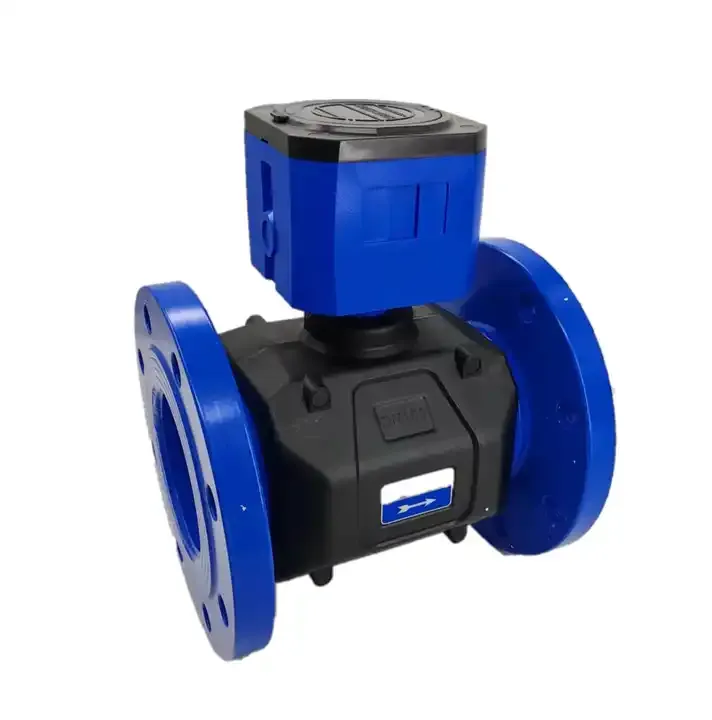
A Woltman meter is accurate on the test bench but can read inconsistently in the field, and almost every case traces back to installation rather than to the meter. Turbine meters depend on a clean, symmetrical flow profile reaching the rotor, so the pipework around the meter matters as much as the meter itself.
Straight pipe runs are not optional
The meter needs a straight length of pipe upstream to let turbulence settle before the flow reaches the turbine. A common industry practice is ten diameters upstream and five diameters downstream (10D / 5D) of straight pipe with no fittings. Where the upstream pipe follows a bend, a reducer, a pump or a partly closed valve, longer upstream lengths are safer. A valve installed immediately before the meter is the single most common cause of a low reading.
Do not install the meter directly after an elbow in the same plane as the turbine rotation - the swirl that comes off the bend pushes more water through one side of the rotor and biases the reading.
Orientation: horizontal is standard, vertical is conditional
Horizontal installation with the register facing upward is the standard configuration for this range. Vertical installation is possible on many models but must be confirmed for the specific body: on a vertical run the flow should move upward, so that air cannot collect around the turbine and the rotor is not carrying its own weight against the flow. A downward vertical run should be avoided.
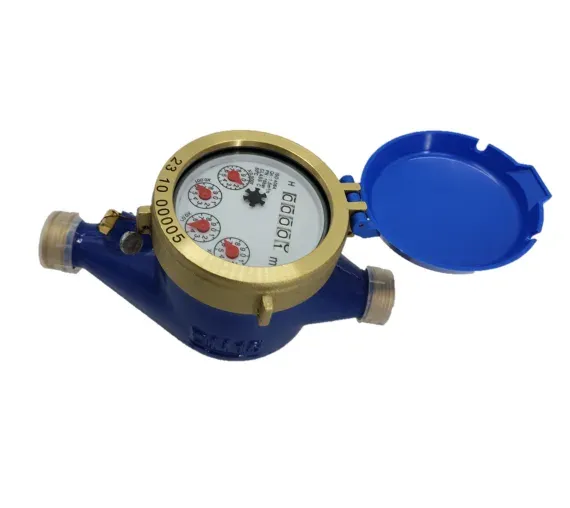
Leave enough clearance above the register to open the lid and read the dial, and enough space around the flanges to get a wrench onto the bolts. Meters are often installed in a pit that is comfortable for the pipe but impossible to service.
Five installation errors that show up as accuracy problems
1. A valve or strainer fitted immediately upstream. Move it at least ten diameters back, or as far as the layout allows.
2. A reducer fitted right at the flange instead of a gradual taper. The sudden change in section creates a jet that hits the turbine unevenly.
3. Air trapped in the line at first fill. Vent the pipe before taking the first readings; an air pocket passing through the meter spins the turbine far faster than the water flow and produces an apparent over-read.
4. Debris from a new pipeline reaching the rotor. Flush the line before the meter is installed, and use the strainer supplied with the meter where one is specified.
5. Backflow or a partly open downstream valve. A turbine can run backwards; check that the installation has a check valve where the system requires one, and that all valves are fully open in normal operation.
Commissioning check
After installation, open the upstream valve slowly to avoid a pressure surge against the rotor, vent the line, then compare the meter reading against a known volume - filling a tank of known capacity is usually enough. A reading that is low by a few percent at low flow, but correct at high flow, almost always indicates an upstream disturbance rather than a defective meter.