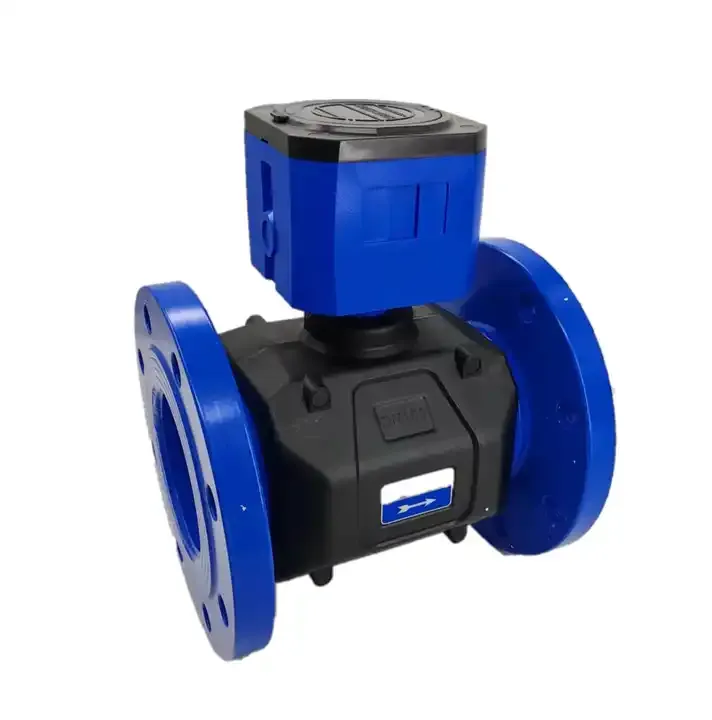
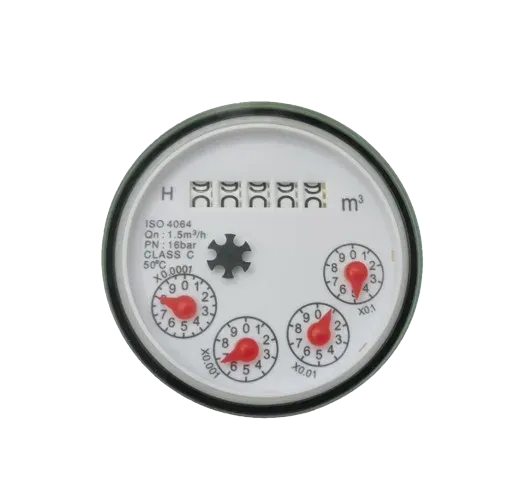
Woltman Cold Hot Water Meter
Woltman Meters in DMA: Sizing by Minimum Flow
How to size Woltman meters for district metered areas: why the minimum night flow Q1 decides the meter size, with the full R50 flow range by DN.
A district metered area only works if its boundary meter can resolve the flows that actually matter there. That is rarely the production peak. It is the quiet three hours after work stops and before dawn, when normal demand drops close to zero. If water is still moving through the pipe at that hour, it is almost all leakage. Sizing a boundary meter by pipe diameter alone is the most common reason a DMA goes live and then produces data nobody can act on.
Why the minimum flow decides, not the pipe size
DMA analysis depends on the minimum night flow, the reading taken when equipment is not using water. That reading is your reference line. Watch it drift upward over weeks, and that drift is your leakage signal. The size of the signal you can detect is bounded by the smallest flow the meter can register.
That number is Q1, the minimum flow, defined in ISO 4064. Below Q1 the register stops counting. If Q1 sits above your real night flow, the meter reports zero while water is still moving through it. No analytics platform recovers that.
So the selection question is not which meter fits DN150. It is what the smallest flow this district can produce at night is, and which meter still counts it.
Woltman flow range by diameter
We manufacture removable-element horizontal Woltman meters rated R50 as standard, R80 on request. This is the R50 range for the sizes most DMA boundaries use. Values in cubic metres per hour.
Model | DN | Q4 overload | Q3 nominal | Q2 transitional | Q1 minimum
LXLC-50 | DN50 | 31.25 | 25 | 0.8 | 0.5
LXLC-65 | DN65 | 50 | 40 | 1.28 | 0.8
LXLC-80 | DN80 | 78.75 | 63 | 2 | 1.26
LXLC-100 | DN100 | 125 | 100 | 3.2 | 2
LXLC-125 | DN125 | 200 | 160 | 5.12 | 3.2
LXLC-150 | DN150 | 312.5 | 250 | 8 | 5
LXLC-200 | DN200 | 500 | 400 | 12.8 | 8
LXLC-250 | DN250 | 787.5 | 630 | 20.16 | 12.6
LXLC-300 | DN300 | 1250 | 1000 | 32 | 20
Permissible error is plus or minus 5 percent from Q1 up to Q2, and plus or minus 2 percent from Q2 to Q4. Hot water meters are rated at plus or minus 3 percent.
Read the Q1 column, not the Q3 column. A DN100 boundary with a Q1 of 2 cubic metres per hour cannot report a night flow of 1.2. It will simply not register it. If your district's night floor is that low, the answer is one size down or a different accuracy class, not a bigger pipe connection.
A practical way to use the table: write down the lowest flow you expect at night in cubic metres per hour, then read down the Q1 column and take the first size whose Q1 sits below that number. Do not read the DN column at all for this step. Once you have a candidate size, check that its Q3 is still above your peak demand, because a meter chosen purely on night flow can end up undersized for daytime throughput. If the two readings point at different sizes, the peak wins and you look for a higher accuracy class instead of a smaller body.
For the full selection logic across sizes, body materials and register types, see our Woltman water meter selection guide.
Same diameter, different minimum flow
This is where specifications usually go wrong. Two meters can share a DN100 flange pattern and behave completely differently at low flow.
Our irrigation and sewage pattern is built for water carrying solids: wider impeller passages, lower blockage risk, and a Q1 of 5 cubic metres per hour at DN100. Our clean-water Woltman of the same diameter is R50 with a Q1 of 2.
That gap is deliberate. Wider passages trade low-flow sensitivity for the ability to pass debris without fouling. On an irrigation main that trade is correct. At a DMA boundary on treated water it is not, because you would be installing a meter that is blind across exactly the flow band your leakage programme depends on.
We use the Woltman meter is therefore not a complete specification. It has to name the series, not just the family.
If you are comparing quotations, ask for the model prefix on each line rather than the catalogue family name. On our range the removable horizontal pattern is LXLC and the irrigation and sewage pattern is WI. Two quotations that both say Woltman water meter can differ by a factor of two on Q1 at the same nominal size, and that difference is invisible unless the prefix is written down.
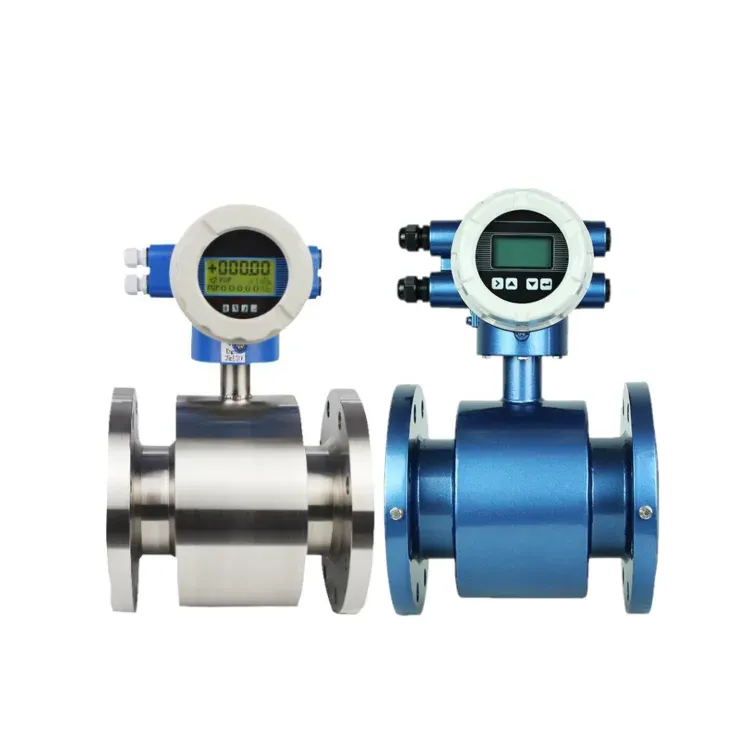
If you also plan to compare electronic sensing at the same boundary, our Woltman versus ultrasonic comparison covers where each one holds the advantage.
What to send us to check a sizing
For a boundary meter recommendation we need the pipe diameter and material, the district's average and peak demand, the expected minimum night flow, the water type (treated, raw or effluent), and the logger or SCADA input you are feeding.
With those we can tell you which size and which series gives a measurable night signal rather than a flat line. And we will say so if the answer is a smaller meter than the pipe suggests.